
A spectacular sunny day filled with numerous unusual sightings.K
- Bob Perry

- Jul 3
- 3 min read
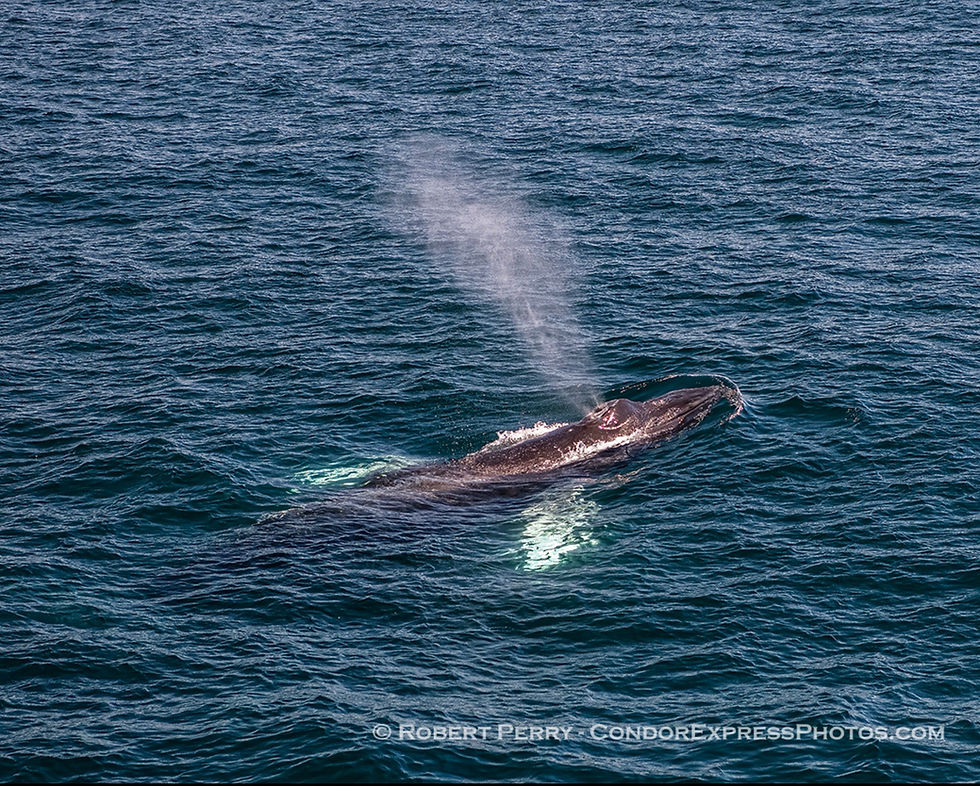
Image: a very friendly humpback whale with prominent white pec fins - photo taken today.
2026 07–03 SB Channel
We had gorgeous blue sunny skies all day. A moderate breeze near the coast quickly died down as we went offshore. The underwater visibility was quite poor in certain spots. Total sights for the trip: 3000 common dolphins, 10 humpback whales, 100 California sea lions, and some very very unusual formations of high flying tern flocks. Captain Dave and the crew headed directly S, and found a hotspot close to a beautiful Santa Cruz Island, S of the lanes.
11 AM. We found a very frisky pod of about 100 common dolphins. They were busy socializing, and we watched them for quite a while. This pod was, to put it politely, frisky. First of all it was a nursery pod with plenty of little calves. Next there was a bit of attempted mating going on, mostly rejected by the female with a swift tail slap. After watching this activity, it became obvious that some of the upside down animals were not attempting to mate, they were attempting to nurse. Most of them appeared to be too big/old for this activity and they, too, received a swift tail slap. This now creates reason #4 on my list of “why dolphins swim upside down.” (1. fun to swim and surf up upside down. 2. Sometimes chasing bait fish is done upside down. 3. Mating happens as males approach a female from below, he is upside down. 4. Nursing. Stay tuned for more!)
11:40 AM. We had a very quick look at a single humpback whale and continued on track for some others that appeared to be more active. A few hundred yards later we found 2 individual whales. Also present in the area were 300 common dolphins and 20 California sea lions.
Noon. We found a mother humpback with her calf. We spent quite a long time with them hoping to get mom to show her flukes. She did not. They were not doing any feeding, and not doing any deep diving…possibly explaining the lack of observed tails.
12:30 PM. A single whale was watched and it came by the boat extremely close. (it is CRC-23138, and you can read about it, and other whales that were identified today by our friend and whale ID expert, Susanne, at the end of this report). Also in the area there were at least 20 more sea lions and another batch of 30 common dolphins.
12:41 PM. Another single whale fluked-up regularly, it was HW–MN0503839. It came out of nowhere and made an extremely close pass right near the bow. It was a sneak surfacing and it caught a lot of people off-guard. 4 minutes later we saw another whale that made a close pass, it had pure white pectoral flippers (I have my photograph of it posted above).
1:05 PM. Our most unusual non-mammal sighting of the day consisted of a straight line of hundreds of terns, flying W very high overhead. I’m will work to identify the species, and I will post a photograph with information to my website tomorrow.
You never know what mother nature has in store.
Bob Perry
NOTES
Here are the 4 whales that Susanne identified. Thank you Susanne! Hopefully your work will stimulate other people to become citizen scientists and submit their tail fluke photos to happywhale.com like you and I do. Even an iPhone picture will do.
CRC – 23138
This whale has been recorded 14 times, 8 of those sightings were the Santa Barbara Channel. It was first recorded in May, 2025, and its last sighting, prior to today, was 2 weeks ago. It never has been N of the Santa Barbara channel, or S of San Diego California.
HW – MN0503839
There are 7 records from the Santa Barbara Channel, out of the 14 times it has been observed. It was first recorded in May 2025, and, like the previous whale, it has never ventured south of San Diego.
HW – MN0503929
There is only one previous record for this animal: October 2025 off of Moss Landing in Monterey Bay California.
CRC-19950 “The Calf of Chompers”
It was first recorded in 2021 when many of us noticed that it chompped at anchovy and schools…a unique feeding process. The last sighting was in March of this year. 14 of its 23 observations come from the Santa Barbara Channel. It has not been found N of Monterey yet, but in the S, there have been 2 records from Cabo San Lucas, BCS, Mexico.


